Sunday, October 18, 2009

99 Cent Books

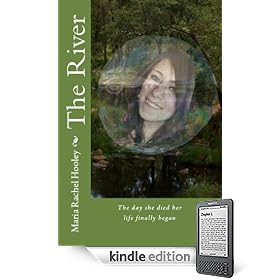
The River

The image “http://ecx.images-amazon.com/images/I/514QSFDiNQL._SL500_AA246_PIkin2,BottomRight,-13,34_AA280_SH20_OU01_.jpg” cannot be displayed, because it contains errors.


Most of us wonder what lies beyond the veil--beyond life in this world. When Diana catches a glimpse of the Other Side and is reunited for a short while with her dead sister, her life takes a wicked turn. Diana, it seems, is not the only one who comes back that day: there's Levi, a disgruntled Vietnam vet, who brings with him the soul of a serial killer--a killer obsessed with Diana and eager to even the score with those who executed him. Gripping and intense, The River is well worth the read, a taut little suspense thriller that shows all too well that, even in the absense of all else, faith can make us strong.

------------------------------------------------------------------------------------------

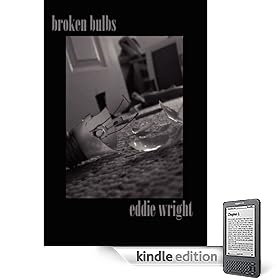
Broken Bulbs

The image “http://ecx.images-amazon.com/images/I/41MvuaRIr6L._SL500_AA246_PIkin2,BottomRight,28,34_AA280_SH20_OU01_.jpg” cannot be displayed, because it contains errors.

Review

"...a brilliant and stunningly original work, by far the best novel I read in 2008."
"If you truly enjoy reading the latest, force-fed pabulum that can be found on The New York Times best seller list, stay the hell away from Broken Bulbs. However, if you welcome the challenge of tackling something totally authentic, surreal, disturbing and existential (and yes at times downright weird!), I strongly recommend Broken Bulbs. Where else can you find a stream-of-consciousness narrative full of references to such diverse subjects as A Nightmare on Elm Street 5: The Dream Child, Peter Brady, Norman Bates, Albert Einstein, Iggy Pop, Franklin Delano Roosevelt and Woody Allen, as well as a demented mailman and six-foot-tall hamster wearing a suit (not kidding!)." --Alternative Reel


Review

"An existentialist's dream, the author has dug in deep and laid bare the raw emotion so candidly that we can actually feel the futility, the desperation, and the humour."
"Philip Dick would be proud."


-------------------------------------------------------------------

Along Came a Demon

The image “http://ecx.images-amazon.com/images/I/51POD0YzZWL._SL500_AA246_PIkin2,BottomRight,-13,34_AA280_SH20_OU01_.jpg” cannot be displayed, because it contains errors.

Product Description

I'm told the dead are all around us. I wouldn't know about that, I see only the violently slain. They can be victims of hit-and-run, innocents caught in a cross-fire, the murdered. They whisper to me and they never, ever, forget the face of their killer. I've learned to live with my uncanny ability, in fact I've made a career out of it.

The departed aren't the only supernaturals I see. No, they're not vampires or werewolves or fae - those things don't exist. We live side by side with what some call the Otherworldy. That's too much of a mouthful for me, I call them demons. If you saw them as I do, you'd know why.

Right now I'm trying to track down a missing six year-old boy whose mother was murdered. Or maybe she wasn't. To further complicate the case, Clarion PD gave me a partner I'd rather shoot than work with.

I can't tell them he's a demon.

They'd think I'm crazy.

I'm Tiff Banks. Welcome to my world.

Kindle Price: $0.99


Gemini Tiger: A Novel for the Unhooked


Product Description
When a sexy single mom with Babydaddy Personality Disorder and a taste for exotic, untamed pool boys receives a DNA ultimatum from the Indiana Department of Public Aid, she decides to drown her troubles in the frigid green waters of Lake Michigan. She who laughs last . . .

A ravenously funny portrait of the Unhooked Generation . . . by the award-winning author of "Ivy" and "Forty Days!"

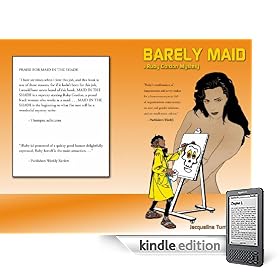
Barely Maid


Barely Maid


Kindle Price: $1.99

Product Description
Publishers Weekly Review, Dec. 18, 2000

“In Barely Maid, Ruby Gordon thinks she's going to spend the next week quietly house-sitting with her best friend, but instead finds herself in the middle of some unusual goings-on, including the murder of a stranger who's come looking for her boss. Ruby's combination of ingenuousness and savvy makes for a humorous mystery full of unpretentious commentary on race and gender relations, and on small-town culture.”

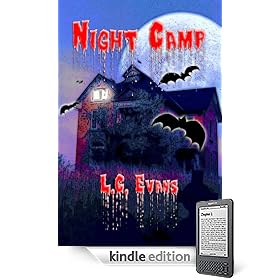
Night Camp

Kindle Price: $2.99


Night Camp

Product Description


A spooky graveyard. A creepy basement. A pair of coffins.
Thirteen-year-old Shane Andrews hates summer camp. When his parents allow him to choose, Shane decides to pick the worst camp he can find. Night Camp must be terrible. For one thing, activities take place at night and campers sleep during the day. That can’t be good, Shane reasons. His parents will realize Night Camp is even worse than they thought and they’ll come back to get him. Then Shane’s plans for summer freedom fall apart. His cousin Brad, a boy with a huge collection of tabloid magazines, convinces Shane that two of the camp counselors are vampires. Shane enlists the help of Brad and a girl camper named Nicole. The three set out to save themselves and the other campers. Then Shane uncovers the secret of Night Camp…

The iPod is dead

Why the days of the dedicated music player have come and gone.

One sign that Steve Jobs is back to his old self: He's already sniping at rivals. After Apple's iPod launch event on Wednesday, the New York Times' David Pogue asked the CEO whether he has doubts — as he's expressed in the past — about the market for e-readers, especially Amazon's Kindle. Jobs said he was still skeptical. Amazon, he pointed out, has never released sales numbers for the Kindle, and "usually, if they sell a lot of something, you want to tell everybody." More importantly, Jobs doesn't think people want to buy a device just to read books. "I'm sure there will always be dedicated devices, and they may have a few advantages in doing just one thing," Jobs said. "But I think the general-purpose devices will win the day."

Jeff Bezos could rightly call Jobs' theory bogus: Really? People aren't willing to pay for a device that only does one thing? Have you heard of a little thing called the iPod, Steve? On the other hand, it's been a long while since the iPod did only one thing. Sure, way back in the early 2000s it just played music. Then Apple added support for audiobooks. Next, some models began to display photos. Photos became videos. Then iPods got a new name, a touch screen, a phone, Web browser, GPS, compass, and, through the App Store, basically any other function developers can think up. On Wednesday, the iPod Nano, whose capabilities had been limited to playing music and videos, got a video camera, too. Now the Nano has two completely different uses — it plays media, and it makes media. People who still want a dedicated music player can get the iPod Classic (which also does video) or the iPod Shuffle, but these products are clearly not the apple of Apple's eye or the source of its revenue. (The Nano and the Touch are Apple's best-selling iPods.)

The new Nano signals an inevitable, though still remarkable, transition: The iPod is dead. I don't mean the name won't stick around or that people will stop buying Apple's devices. Rather, the sun is setting on what the iPod once was—a device you bought to play digital music. Nobody knows when Apple will add Internet connectivity to the Nano, but you'd be a fool to bet against it happening in the next three years. And with that, the floodgates: Once the Nano gets the Internet, why not the App Store? And why not GPS, a compass, and a touch screen? At the moment, these options are too expensive to add to a tiny device, but tech is always getting cheaper and smaller. The video camera is just the start—it won't be long before the Nano, like the iPod Touch and the iPhone, turns into what Jobs calls a "general-purpose device." The rest of us have another name for such a machine: a computer.

Not everyone will herald this transition. After all, why do you need a mini-computer when all you want is a music player? That question is a variation on a more general lament regarding the consumer-electronics industry—what critics call "feature creep." Why are they always adding more stuff? The idea of building a camera into a cell phone once struck a lot of people as bizarre—who wants to take pictures with a phone? But it's now impossible to get a mobile without one. Why does that always happen? Why can't they leave well enough alone?

In the case of the iPod, there are two reasons. The first is pretty obvious: Apple wants to sell as many of the gizmos as possible. The iPod Nano sans camera was the world's best-selling music player, and it's not hard to see why. Small, stylish, easy-to-use, and not that expensive, you couldn't really ask for anything more in a music player. Which, of course, was Apple's problem—once you buy an iPod Nano, why would you ever want a new one? (Well, assuming the old one doesn't break.) Apple's third-quarter financial results, released in July, showed that iPod shipments fell 7%t from a year ago. Tim Cook, Apple's COO, told investors that the decline was due to "cannibalization" from purchases of iPhones and "a reduction in the market size for traditional MP3 players." How do you solve that second problem? Make a device that appeals to people outside the declining market. Hence the iPod Nano gets a video camera.

This gets to another reason for Apple to keep adding features that go beyond the iPod's original purpose: People like more features. The conventional criticism of feature creep is that it adds unnecessary cost and complexity. Attaching a camera to a cell phone adds more buttons, menus, points of failure, and a bigger price, all for something you don't want. Well—something you thought you didn't want. It turns out that despite people's protests otherwise, a lot of people take a lot of pictures with their cell phones—the iPhone is Flickr's biggest source of photos . If cell cameras were truly distasteful, we'd see stripped-down, camera-free phones selling like gangbusters, but that's not the case. And as Apple has shown with iPhone and iPod Touch, adding a lot of features doesn't necessarily make for bloated devices. If you pile on features in an elegant way—if you keep the interface comprehensible and make sure the parts work well together—then feature creep becomes feature nirvana. You can get an iPod and a video camera in one? Why not?

None of this is to suggest that dedicated digital-music players won't stick around for some time. Indeed, the very same dynamics that lead to feature creep on the iPod will probably give us better single-purpose music players in the short run—devices with better screens, more room for music, and at better prices. Today, you can get a 16-GB SanDisk SansaView MP3 player for US$100; by next year, its capacity will double, and its price will halve. (Some advice to manufacturers of these music players: Take a page from Palm's playbook and rig your devices to sync with iTunes. Apple hasn't proven that it has any legal right to restrict third-party components from connecting to its software—imagine if Microsoft only let you use certain printer brands to connect to Word—and until it does, why not advertise yourselves as iTunes compatible?)

But don't expect this sector to last forever. In time, these players, too, will morph into computers. That's the way computing goes—as Jobs says, general-purpose devices eventually supplant everything else. There was a time when people bought portable word processors because computers were too expensive and all they wanted was something to write with. But in time PCs got cheaper, more portable, and more useful, and it no longer made sense to buy a writing machine. More recently, folks bought little devices called PDAs, tools to keep your appointments and contacts in order on the road. That was short-lived: Now every cell phone is a PDA. It's also a camera and a jukebox. And then there's the case of the Kindle, a dedicated device for reading books. Uh, Jeff Bezos — you might want to watch your back.

Amazon's Kindle goes global -- but not to Canada

Amazon.com Inc.'s popular Kindle digital book reader is now available to literary enthusiasts outside the United States, but Canadians hoping to get their hands on the device are still out of luck.

On Wednesday, the Seattle, Washington-based Internet retail titan announced it was trimming the price of the Kindle ebook reader from US$299 to US$259 while simultaneously introducing a version of the device designed to work in more than 100 countries and territories around the world.

The new international version of the Kindle costs US$279 and will begin shipping on Oct. 19 to countries such as Bolivia, Democratic Republic of the Congo, Hungary and Japan.

“Kindle is the most wished for, the most gifted, and the No. 1 bestselling product across the millions of items we sell on Amazon, and we’re excited to be able to lower the price,” said Jeff Bezos, Amazon.com's founder and chief executive officer.

“We’re also excited to announce a new addition to the Kindle family—Kindle with global wireless. At home or abroad in over 100 countries, you can think of a book and download it wirelessly in less than 60 seconds.”

Canadians, however, are still unable to purchase Kindle devices through Amazon or download Kindle content, such as digital books and newspaper subscriptions.

Amazon.com executives could not immediately be reached for comment.

Kindle Looks to Europe

European publishers gathering in Frankfurt Wednesday for their biggest conference of the year hope some of the buzz around electronic books in the U.S. will rub off on them now that the international version of Amazon.com Inc.'s Kindle is on its way.

The reality, however, is that language issues and a divided wireless market mean the Kindle's arrival in Europe is likely to be slightly different than in the U.S.

View Full Image
EREADER_MKTP
Associated Press

E-readers at the Chinese pavilion at the Book Fair in Frankfurt on Tuesday. Publishers hope that the introduction of of Amazon's Kindle in Europe will stir more interest in electronic books there.
EREADER_MKTP
EREADER_MKTP

U.S. sales of e-readers are growing. In a recent report, Forrester Research Inc. estimated that three million e-readers would be sold in the nation this year, and six million next year. In Europe, the main e-book devices on offer, such as Sony Corp.'s Reader and the Cool-ER from U.K.-based Interead, can only retrieve books through a computer connection, rather than wirelessly, and sales of e-books have been slow. Sales for print books in Europe's major markets of France, Germany and the U.K. held flat from last year.

Research company GfK estimates that e-book sales in Germany totaled only €667,000 ($986,000) in the first half of this year.

Europe's e-readers also have less memory than the Kindle. Sony's Reader can hold 350 books, but the Kindle can hold about 1,500 for a similar price.

The U.S. marketis scheduled to get a wireless version of Sony's e-reader before Christmas and one from Interead early next year, but both companies plan to make their wireless e-readers available for Europe later.

"Amazon's move to make the Kindle available outside the U.S. will boost visibility of e-readers in Europe and other countries," said Forrester Research analyst Sarah Rotman Epps. In Germany alone, the e-book, paper and magazine segment could be valued at more than €1 billion by 2014, said Mark Ritzmann, head of new-business development and innovation at Vodafone Group PLC's German unit. The figure is based on a sales forecast by PricewaterhouseCoopers of six million e-readers in the next five years. Germans spend €24 billion a year on books, magazines and newspapers.

But in Europe, the Kindle also faces competition from wireless operators looking to sell books and other media through online platforms or with devices similar to the Kindle or through netbooks, which are smaller, lighter and more portable versions of laptop computers.

U.K.-based wireless operator Vodafone in Germany is in talks with major publishers and device manufacturers, among them South Korea's Samsung Electronics Co. Kai Lenk, a product manager for Samsung Electronics in Germany, confirmed the talks, but declined to provide further details. France Télécom SA's Orange plans to launch an online platform sometimenext year that will be accessible to several different kinds of devices, the company said. It has been evaluating e-reader opportunities for more than a year under the project name "read and go," and wants to make content available on multiple devices including smart phones and netbooks.

Book publisherRandom House Inc.'s German unit is in talks with industrypartners about e-readers and sees the potential for those with wireless capability to provide a newsource ofrevenue, said Chief Operating Officer Frank Sambeth. He declined to provide further details of the talksbut said wireless electronic books will make it easier for people to buy books spontaneously, while older customers without a computer may find these simpler devices more appealing.

"The more platforms that exist the better," Mr. Sambeth said, but he added that it is still to too early to say how revenue will be shared between publishers, network providers and device manufacturers.

Deutsche Telekom AG has no concrete plans for an e-reader platform, according to a T-Mobile spokesman, but he said the company is watching the area closely. Outside of the U.S., AT&T Inc. will provide network access for Kindle based on its roaming agreements with international carriers. The device will cost $279, plus shipping charges from the U.S.

The Kindle will also have sparse offerings for those who don't speak English. Starting Oct. 19, it will be available in more than 100 countries and territories, but provides books only in English, though some newspapers and magazines are available in German, Italian, Spanish and French. Expanding the book library to German titles is planned, an Amazon spokeswoman said, but she couldn't say when.

The Kindle works with an e-ink display that Amazon says reduces eye strain, even in sunlight, compared with other portable devices. Amazon offers all kinds of print products on the Kindle, ranging from blogs to newspapers. However, the newspapers and magazines available on Kindle outside the U.S. won't include photographs or other images, limiting the scope for advertisers.

Ulrich Schmitz, an executive at Germany media companyAxel SpringerAG, said e-readers are a new and interesting distribution channel though devices currently available are more suitable for books than newspapers.

How Kindle Could Win (or Not) in the UK

Tax headaches and connectivity problems could stifle U.K. Kindle sales, as Amazon introduced on Wednesday its e-book reader to the British public.

amazon kindle e-bookTo the delight of my fellow UK e-book fans, Amazon announced that the Kindle 2 would be available from October 19. The Kindle was long overdue in the U.K., where it is expected to finally kick-start the e-book market, but it might not be the case yet, as the U.K. version of the Amazon Kindle is only half-baked.

Because U.K. Kindle buyers will have to order the e-book reader from Amazon's U.S. site, customers will have to pay extra tax for the device, due to the country's regulations. Also, because books will be sold from the U.S. site as well, customers would be technically avoiding the Value Added Tax (VAT) system in Britain, which if applied, would make the books more expensive.

Amazon also had difficulties making Kindle's Whispernet wireless download system (hosted by AT&T in the U.S.) work in the U.K, so the company had to resort to downloads via the country's 3G network. Outside 3G coverage, users will have to transfer content to their Kindle over USB.

So if you buy a Kindle in the U.K, you will be able to download books wireless as long as you are in a 3G coverage area. While most of the country is in such an area, indoors 3G coverage in the U.K. is patchy, so for example, I would have to download books for my Kindle from my back garden, as there is no 3G coverage in my living room.

However, Amazon's Kindle will the have the advantage of being the only e-book reader with a wireless connection in the U.K., where Sony has yet to introduce the Daily Edition of its e-reader, which has such capabilities. The U.S. Sony Reader Daily Edition will be the second e-book reader after the Kindle to have wireless capabilities.

Amazon Dumps Overseas Web Access on International Kindle

San Francisco - Amazon.com's (NASD: AMZN) new international version of its Kindle e-book reader will not feature wireless Internet connectivity, at least at launch, Wired.com reports.

Amazon pays for the 3G network connectivity that American Kindle owners enjoy, currently provided via AT&T.

Wired.com notes that Europe has enviable 3G network coverage, but hefty roaming charges could be coming into play -- and Amazon may opt to sign individual deals with local mobile network operators in the countries in which it sells the Kindle.

Will Barnes & Noble E-reader Push Kindle Prices Lower?

Now that Barnes & Noble is reportedly launching its very own E-reader, will prices on Amazon.com’s competing Kindle keep tumbling on further?

Based on recent historical trends in the still emerging e-reader market, that would only stand to reason.

After all, following Sony’s introduction of the $199 Sony Reader Pocket Edition in August, Amazon.com cut pricing on the Kindle by $40 to $259.

In a report accompanied by what it says are photos of the rumored device, Gizmodo pointed, as a differentiator, to the purported device's dual screen — a six-inch monochrome e-ink screen said to lie on top of a smaller, color, multitouch screen.

Meanwhile, earlier this month, Forrester analyst Sarah Rotman Epps predicted that e-reader prices will continue to fall. She also forecast that in 2010, we’ll see Barnes & Noble – as well as a new generation of table PCs from Microsoft, Apple, and others — stepping up serious competition to Kindle.

As more e-reader details emerge, it’ll be interesting to find out whether or not the dual-screen device speculated on at Gizmodo is one and the same as the e-reader jointly announced by Irex, B&N, and Verizon Wireless a few weeks back.

From Gizmodo’s photos, the hardware looks nearly identical to that of the Irex gadget. But Irex said nothing about a dual-screen, and the user interfaces seem different to me.

In any case, there’ll soon be at least one – and possibly two – new entries into the e-reader race. And in either scenario, that’s good news for cash-strapped consumers
.

Monday, October 12, 2009

Never mind Kindle - LG's new e-book reader is solar-powered

border="0" alt="" />

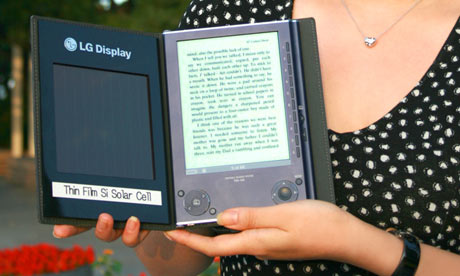
If we were stuck on a desert island with only one book, this recently unveiled solar e-book would be at the top of our list. Designed by LG Display, the sleek reader features a wafer-fin photovoltaic cell that provides it with a steady stream of solar energy. Whereas most e-books run the risk of losing juice mid-sentence through your next novel, this solar reader's omnipresent energy source makes it a winning design in our book.

At first glance e-readers offer a great set of benefits over paper-bound books – they're light, versatile, and a great alternative to lugging around a tote full of dead tree tomes on your next trip. The rise of e-readers also stands to stem the environmental repercussions of the publishing industry, as books can be released online rather than incurring the energy, materials, and cost that it takes to manufacture, print, and ship them across great distances. However these new reading mediums have one glaring fault – can you imaging the frustration of running out of juice mid-sentence and halfway through Infinite Jest?

LG's new solar e-book aims to address this issue by harnessing the sun's rays to power its display. The device features a 10 centimeter wide thin-film panel that is .7mm thin – the width of a credit card. Energy efficiency is a strong concern with portable readers, and it looks like LG may have hit on a winning feature set with their e-book – 4-5 hours spent sitting in the sun will provide a full day's worth of reading time.

Ki Yong Kim, head of the Solar Cell Office at LG Display has stated that "ebooks are attracting a lot of attention because they offer the advantage of storing thousands of books' worth of contents in an easy-to-carry device. The idea of ebook combined with solar cell will offer users the added benefit of longer usage. We will continue to provide users with enhanced convenience and value to solidify our lead in next-generation, environmentally friendly products."

Everyone knows that trying to read a computer screen outdoors can be a total pain, so we hope that LG has included a passively-lit e-paper display option in the device. A working prototype of the solar ebook will be on display at the International Meeting on Information Display (IMID) this week in Seoul.

Amazon adds over 18,000 free public domain titles to Kindle Store

Amazon has been adding public domain titles to the Kindle eBook store at a frantic pace over the past few days. As of this afternoon, there were over 18,000 titles in the eBook store available as free downloads. Most are public domain works, which means they are no longer protected by copyright.

Of course, Amazon's in the business of selling books, not giving them away. But by giving away these books, Amazon may be able to convince potential customers to buy the Kindle eBook reader... and once they own it, odds are they'll spend a few bucks now and then on newer titles in the Kindle store.

It would have been nice if Amazon had thought of this tactic before launching the Kindle. But the rapid growth of the public domain library in the Kindle store is more likely a response to the fact that Sony eBook readers can access Google's massive collection of scanned public domain works.

So while Amazon's 18,000 public domain downloads are a good start, Google has over half a million titles, which means Amazon still has some catching up to do.

Fees pile up for international version of Kindle

A fuller picture of the various fees -- and limitations -- of Amazon's new international Kindle is emerging ahead of the reader's Oct. 19 ship date. Turns out there's a raft of download fees for U.S. travelers using the internationally enabled Kindle. Non-U.S. customers also face higher prices on Kindle books. Blogs are not available internationally on Kindle, and the Kindle's basic web browser only works in some countries.

Here's a breakdown of wireless download fees for U.S. travelers using international Kindle:

•Books: $1.99 per book

•Newspaper, magazine subscriptions: $4.99 per week

•Individual issues of newspapers and magazines: $1.99 per issue

Also, U.S. travelers will pay 99 cents per megabyte to transfer personal documents to their Kindle (as opposed to 15 cents per megabyte in the U.S.).

Amazon spokesman Drew Herdener confirmed that blogs are not available internationally on Kindle and that the Kindle's experimental web browser only works in some countries (in Japan, for instance).

U.S. travelers will pay the standard $9.99 for new release books and bestellers on Kindle (plus the various download fees outlined above). Non-U.S. customers will pay a higher price for Kindle books, Herdener explained:

In the EU where there’s VAT, New York Times Bestsellers and New Releases are $13.99, and that includes VAT. It has been misreported that this price is for all international customers. Outside the EU and US, New York Times Bestsellers and New Releases are $11.99.

PaidContent calls the international Kindle's fee structure a "virtual ATM for Amazon," but notes that users can avoid most fees by dowloading content to a PC and transferring it to a Kindle via USB, thereby avoiding the need for wireless download.

Asked for reasons behind the various fees associated with international Kindle, Herdener said "our operating costs are higher outside the US" and noted that the the cost of Kindle book costs in the European Union includes value added tax (VAT). He offered no further detail.

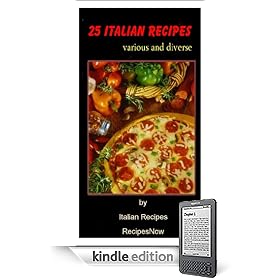
25 Italian Recipes at $.99


25 Italian Recipes


25 great gourmet recipes. A low price too...

The Afternoon Book Spotlight 8-28-09

The image “http://ecx.images-amazon.com/images/I/31xkY5Nx0vL._SL500_AA146_PIkin2,BottomRight,1,34_AA180_SH20_OU01_.jpg” cannot be displayed, because it contains errors.

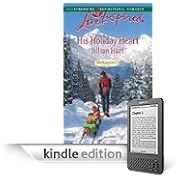
His Holiday Heart

Product Description

What can make a grumpy "there-is-no-Santa-Claus" kind of man smile? The sight of quirky Lucy Chapin. Something about the woman creates warm and fuzzy feelings within confirmed bachelor Spence McKaslin. So he'll just have to ignore her. Hard to do, since they're working together on a Christmas program for hospitalized children. The time with lovely Lucy soon has Spence thinking twice about spending his life alone. Because his heart is open to giving and receiving.


Excerpt. © Reprinted by permission. All rights reserved.
"I know your secret, mister."

Spence McKaslin jerked his attention away from the spreadsheets and frowned at his sister, Danielle. She was leaning against the doorjamb to his office with her arms crossed in front of her. Somehow she managed to look kindly and meddling all at once. He frowned. "What secret do you think you know? I don't have any secrets. I don't have time for any."

"Sure. I know you're a busy man." She laughed. A loving soul, she always had a smile for everyone these days, especially since her hardship at home was over. Her wedding ring sparkled as she shook her head at him with utmost disapproval. Mischief flashed in her dark eyes, and she gave an eye roll. "You can't fool me, big brother. I'm on to you."

"Wow, I'm really worried." What on earth was she talking about? he wondered. What did she think she knew? It had to be really good, considering the amusement on her face. He didn't approve of amusement.

Amusement had never helped him. He shoved his chair back and moved a little. His muscles were stiff from sitting in the same position for the past hour or so.

Snow was falling harder outside his office's corner window, obscuring the buildings across the parking lot and disguising the pavement so it looked like a winter wonderland. He scowled. He didn't like wonderlands either. "Talk to me about something real. Something that matters. How's the traffic?"

She flashed him that glimmer of humor. "It's November, you know that, right? I heard that it's snowing. This morning it was sunny, and now there's a surprise winter storm advisory out there. The roads are a mess."

It was his turn for an eye roll. This is what he got for working with family. Family you couldn't choose, and they were impossible to order around. Harder to fire. He tried to hide his great affection for Danielle behind a bigger scowl. He had a reputation to protect. "I was asking about the store."

"I know." That stubborn cheerfulness didn't dim one iota. "Spence, you would be an incredibly handsome man if you would just put a smile on your face."

"Now you're sounding like Dorrie." Dorrie was his stepmom and Danielle's mom. "I'm not falling for that handsome line. I don't mind looking homely and disagreeable."

"Sure, you don't, but the rest of us have to look at you, brother dear." She gave him a wink, still lighthearted and apparently distracted from the topic of his secret.

Whew. He had only one secret and no one— repeat no one—knew about that. There were days when that secret was so secret that he almost couldn't remember it himself.

"We haven't had a customer for the last two hours." Danielle gave him the look—the mom look she used on her kids. "I've counted down the tills, I'm turning over the sign and I'm going home."

Good thing he was immune to the mom look. "This is my store. We stay open until closing time."

"I'm driving home while I can still navigate the roads. I sent Kelly home, too."

"What?" That brought him to his feet. This was his store and Katherine, whom Danielle had replaced as his assistant manager, understood that. He and Dani were still figuring out how to work together. She was still new, but that didn't mean she could go usurping his authority. "Customers depend on us to be open."

"Customers are not going to be fighting through the snow to find us on Thanksgiving Eve." That smile faltered, and it was replaced by something worse—sympathy, maybe even pity. "I know you don't want to go home. I understand what it's like to unlock the door and step into an empty house. Remember when Jonas was in the Seattle clinic?"

"I remember." Remembering made his chest tangle up with a whole lot of feelings he had no interest in feeling. Jonas, his brother-in-law and Dani's husband, had been shot on a routine traffic stop a year and a half ago, and no one had thought he would recover from his traumatic brain injury. But he was coming along just fine. Grateful, Spence swallowed hard, managing to beat down every emotion. "Go home to your husband and kids. They're waiting for you. I'll close up here."

"I don't want you staying late." Her look turned to one of concern. "You're welcome to drop by for dinner. Jonas is cooking, and he's gotten pretty good. He's been watching cooking shows on television. I think he's doing homemade pizza tonight. It should be tasty."

Sure, he knew what she was doing, offering him a balm for his loneliness. He couldn't count the number of times he'd taken her up on it, and he liked the idea of having somewhere to be. He and Jonas could catch a sports show. There were the munchkins—his little niece and nephew—to play with. One thing he liked was Dani's kids.

But what if he had failed to distract her? What if she really had figured out his secret? Then there was no way he was going to put himself in close proximity to her so she could bring that secret out in the open. He hated to, but he forced out the words. "No, thanks. Maybe another night."

"Sure. Okay." Danielle took a step back, and that mischief returned to her eyes. She disappeared into her office for a few minutes, and the next time he saw her she was wearing a black wool coat and had her purse in hand.

"Drive safe," he called out, going back to his worrying spreadsheets.

"I will. Thanks." Danielle stopped at his door. "I should tell you that you're not alone in the store. Lucy came—"

"Lucy?" he interrupted. The spreadsheet numbers rolled right out of his head. His mind went blank. His lungs forgot to suck in air. "Lucy Chapin is here?"

"You don't have to say that like she's contagious with the bird flu. She's signing a shipment of her latest book because I asked her to," Danielle explained as if that was no big deal.

It was a big deal. His pulse began to thud in his ears. His palms went damp—a sure sign of panic. "Lucy is here right now?"

"She's in the break room. Are you all right, Spence? You've gone beet-red."

"Just my blood pressure." Or worse. And in that moment his worst suspicions about Danielle had come true. Not only did she know how he felt about Lucy Chapin but she was leaving him alone with her on purpose. There was no other explanation. "How did you know?"

"Careful observation." Danielle didn't even look apologetic as she turned on her heels. "I'm thinking she'll be done in a few minutes. The least you can do is thank her, and see if she needs anything else."

"You do it."

"Sorry. I've got to get home. Talking to her would do you good, Spence." She called over her shoulder and sauntered around the front counter. "Call me, and tell me how it goes."

He couldn't see anything other than red. Bright crimson splashed across his field of vision. He put his hands to his face. This was too much. How had she guessed? Danielle was good; he had to give her that. Somehow she had figured out he had a tiny, miniscule, barely nothing at all crush on Lucy Chapin.

Not that you could really even call it a crush. More like a dysfunction of his eyes, which made them always turn toward her whenever they were in the same room. That was all. Nothing more. Nothing serious.

He didn't believe in love. Not even a little bit. So he got up and closed the door. With any luck, Lucy would finish her signing and leave all on her own without a single word to him. Besides, it wasn't as if she liked him either. She'd always done her best to steer clear of him.

With any luck, she would avoid him, and his eyes wouldn't malfunction and glue to her pretty face and gentle smile. Comforted, he bowed his head over his profit ratios and tried to concentrate.

The phone rang. He snatched it up. "Corner Christian Books. How can I help you?"

"Spence?"

Wait. He knew that soft voice, as melodic as lark song. Every defensive shield he had went up around his heart. "Lucy?"

"I'm calling from the break room. Danielle said you were busy in your office, and I didn't—"

His ears stopped taking incoming information. There was just a haze of static as he digested what she'd said so far. She was calling him from the break room? He shook his head. That was something his younger sister Ava would do—the flaky sister. He adored Ava, but he didn't trust her with a set of keys to the store. "You're calling me when you're what, ten yards away?"

"Sure." She seemed unfazed by that or at least unable to see that her behavior was, well, quirky. "I didn't want to interrupt you."

"By knocking instead of calling?"

She was silent a moment, but when she spoke, her voice was still stubbornly meadowlarkish. "This is just a quick call. I've hauled the books back to the storeroom in the boxes, just like they came. I'll go out the back, and I'll be out of your way, but I wanted to make sure the alarm wasn't on. I don't have the best luck with alarms."

"No, I haven't set it yet."

"But Danielle locked up and turned off the store lights, and so I just wanted to make sure—" She must have felt she had to explain.

He was probably sounding terse again. Well, better that than vulnerable, right? He was grateful for the hard-won shields he'd learned to put up around his heart—around everything. "Fine. I understand. You're free to go."

"Great. Thanks." Surely he'd insulted her, but it didn't show in her voice. "Have a good evening. Bye."

The line went dead, but he couldn't seem to move. Even her voice had a strange effect on him.

Her kind alto seemed to circle around in his head, and he wished for one second that he was a different kind of man—one who believed in true love and happy endings and all that make-believe stuff. Because if he could, then at least he wouldn't be alone. Instead of wishing he'd never see Lucy Chapin again; he would be hoping he could see her again. Talk to her. Take her out to dinner. But he wasn't that kind of a man.

He was the type of man who went back to his work. To his responsibilities. The store was his parents'. Some thought that meant an easy ride, since he'd walked into this job and his parents weren't about to find fault with him. But working for his folks meant something different to him. Commitment. Responsibility. Going beyond and do...
Sunday, October 4, 2009

Kindle Price: $0.99

The image “http://ecx.images-amazon.com/images/I/51yF1ZmLZwL._SL500_AA246_PIkin2,BottomRight,-2,34_AA280_SH20_OU01_.jpg” cannot be displayed, because it contains errors.

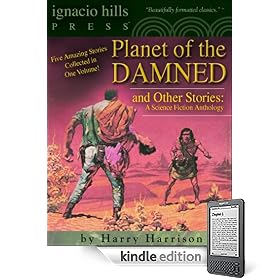
Planet of the Damned and Other Stories: A Science Fiction Anthology (Five Books in One Volume!) (Kindle Edition)

Product Description
NOTE: This edition has a linked "Table of Contents" and has been beautifully formatted (searchable and interlinked) to work on your Amazon e-book reader or your iPod e-book reader.

Anthology of classic science fiction stories by science fiction author Harry Harrison.

In this volume:
Book One: The Repairman
Being an interstellar trouble shooter wouldn’t be so bad...

Book Two: The Misplaced Battleship
It might seem a little careless to lose track of something as big as a battleship... but interstellar space is on a different scale of magnitude. But a misplaced battleship--in the wrong hands!--can be most dangerous.

Book Three: The K-Factor
Speed never hurt anybody--it's the sudden stop at the end. It's not how much change that signals danger, but how fast it's changing....

Book Four: Planet of the Damned
Brion has just won the Twenties--a global competition that tests ones' achievements in 20 categories of human activities. But Brion must leave his world to help salvage the world of Dis, the most hellish planet in the galaxy...

Book Five: Toy Shop
The gadget was strictly, beyond any question, a toy--not a real, workable device. Except for the way it could work under a man's mental skin...

A must-read for classic sci-fi and pulp-fiction fans!

Child of the Lamia

Kindle Price: $0.99

Taken from the short story collection "Strange Times," this is the story of a vampire from India struggling against his demonic creator.

U.S. magazines plan online newsstand, led by Time

TORONTO (Reuters) - Time Inc is gathering U.S. magazine publishers to start a jointly run digital newsstand next year that would deliver their titles to mobile devices like increasingly popular electronic book readers.

Time Warner Inc is leading the effort, and has approached other big U.S. magazine publishers including Conde Nast and Hearst Corp, a source with knowledge of the joint venture but no authorization to speak about it told Reuters.

Users of the service would get a digital newsstand where they could buy subscriptions, potentially by the month or year or in other forms, the source said.

The venture would let magazines that have been hurt by a sharp decline in advertising in revenue in recent years get their titles in front of people who increasingly are turning to devices like Amazon.com Inc's Kindle and Apple Inc's planned tablet device to read books, magazines and newspapers.

It also would charge readers for their content, something that newspaper and magazine publishers have found nearly impossible to do after more than a decade of being on the Web.

The stakes are high for publishers to find more ways to make money online. Print ad revenue is falling across their titles, forcing some to close and putting the long-term futures of others in doubt. Many reports have speculated that Time Warner could even sell its magazine division, though nothing is imminent, sources have previously told Reuters.

A formal announcement of the venture could come within a month, and the service is expected to launch sometime next year, the source said, adding that many financial details still must be worked out.

The idea originated under John Squires, a Time Inc executive who earlier this year was charged with coming up with ways to help Time Inc and its titles such as Time magazine, Sports Illustrated, People and Fortune make money online as the print business declines.

Parent company Time Warner has been trying to do this in other ways, including the ambitious effort with Comcast Corp to work on "TV Everywhere," a program to extend cable programing to the Internet.

The idea bears some resemblance to the Hulu online TV project run by General Electric Co's NBC-Universal, News Corp and Walt Disney Co's ABC, as well as private equity company Providence Equity Partners.

Officials at the publishers were not immediately available for comment. The Media Memo and PaidContent.org blogs and the Financial Times newspaper reported the news earlier on Friday.

People already can use the Kindle to read periodicals, but many newspaper publishers do not like the arrangement because Amazon in many cases claims 70 percent of the revenue from those subscriptions.

The joint venture would let publishers set their own terms for dealing with their readers, increasing their leverage with device makers.

Time has held conversations with publishers, and the publishers in turn have had conversations with several device makers to see what kinds of technology would be most attractive for the publishers, the source said.

One important element, the source said, is finding ways to make the act of turning pages on an electronic device as easy as it is with paper. Another is finding ways to present photographs in ways that are as attractive as they appear in many glossy magazines. Yet another would be adding video.

Amazon Settles Kindle Deletion Lawsuit For $150,000

A student who sued Amazon in June for deleting a copy of the book 1984 from his Kindle e-book reader has won limited deletion protection for other Kindle users.

Amazon (NSDQ: AMZN).com has agreed to pay $150,000 to the student who sued the company for deleting his digital copy of George Orwell's 1984 from his Kindle e-book reading device.

In June, Amazon received a demand to remove unauthorized copies of George Orwell's 1984 and Animal Farm from its Kindle Store. The company then refunded the $0.99 purchase price to customers who had bought the e-books for their Kindle devices and deleted copies of the e-book files for almost 2000 customers.

The deletion prompted widespread criticism from Amazon customers, rights advocates, and bloggers, on whom the Orwellian nature of Amazon's actions were not lost.

On June 23, Amazon CEO Jeff Bezos posted an apology for the e-book deletion. "Our 'solution' to the problem was stupid, thoughtless, and painfully out of line with our principles," he wrote. "It is wholly self-inflicted, and we deserve the criticism we've received. We will use the scar tissue from this painful mistake to help make better decisions going forward, ones that match our mission."

Two days later, one of the customers stripped of his Kindle copy of 1984, Justin D. Gawronski, sued, in part because the deletion affected annotations about the book he had made using his Kindle.

Amazon's Kindle license agreement makes it clear that e-books bought for the Kindle are licensed rather than owned. The document also claims rights to alter the service. However, lawyers have argued that it's not clear from the Kindle license agreement that Amazon has the right delete purchased content.

As part of the settlement terms, Amazon has agreed not to delete Kindle e-books purchased and used in the US in the future, unless (a) the user consents; (b) the user seeks a refund or an electronic payment fails to clear; (c) a court orders the deletion; or (d) deletion is necessary to protect against malware.

This does not apply, however, to software code, "transient content such as blogs," or "content that the publisher intends to be updated and replaced with newer content as newer content becomes available."

In the case of Kindle newspaper and magazine content subscriptions, content is designed to be deleted, unless the user takes steps to save the content.

The law firm representing the student, Kamber Edelson LLC, plans to give its portion of the settlement to "a charitable organization that promotes literacy, children's issues, secondary or post-secondary education, health, or job placement," according to the settlement document.